
July-August
Church Reports 2018
Minchinhampton-Nkokoto Link Report
The Link has been in touch with Stima in Urambo recently and he has kept us up to date on the projects that we are financing this year. We are pleased that work on the nurse’s house has begun and she will soon be able to move back in. We have had the details of the work to be done on the primary school’s rainwater harvesting tank that the Link built some years ago – you will remember that the internal floor leaks substantially and needs resealing with cement. We have had the drawings and costings for the new teachers’ house to be built. It will be for two teachers (and possibly their families,) is semidetached and will have basic toilet and washing facilities, a vast improvement on the present houses. Michael, the Headteacher of the school, has sent his greetings and thanks to Minchinhampton for the equipment and furniture purchased for the school. Other work the Link has completed in the village has been detailed in previous reports to this magazine so I won’t repeat them here.
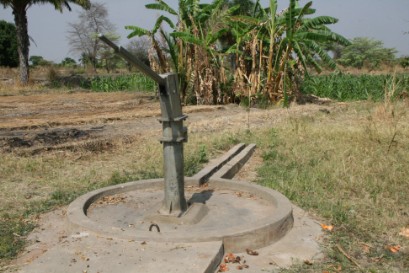
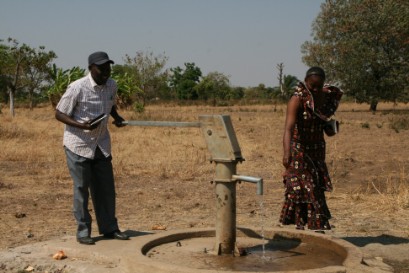
The two boreholes that the Link has built in Nkokoto are both functioning well. Readers may remember that one of the requests made by the villagers during my visit in September was to build a pipeline from the furthest and most recent borehole to a holding tank in the centre of the village. This would make sense and would mean that the ladies and children who fetch the water and carry it to their houses would have a much shorter distance to walk and carry their water containers. Water, as you know, is heavy! We understand that the Urambo District Water Engineer is looking into the feasibility of this project. Ideally, the villagers would dig the trench for the pipes, the pump could be solar powered and the tank large enough to supply the needs of the villagers during the dry season. When we think about how easy we obtain our water for drinking, washing, cleaning and cooking, and how much we use (and waste!?) each day, we can fully justify making every effort to improve the availability of water for the Nkokoto people. Watch this space!
Basic development in Tanzania – especially in education, health, electrification, water access and sanitation – remains key to economic improvement. Hopefully, the Link is playing its small part in moving Tanzania forwards. We are very aware that Tanzania is one of Africa’s fastest growing economies, with nearly 7 percent annual GDP growth since 2000. Yet widespread poverty persists – as in Nkokoto - nearly half of Tanzania’s population is living on under 3,000 Tanzanian Shillings (£1.00) per day. Economic growth has been hardly perceptible in many rural areas in the Urambo District. Improvements in living standards are not helped by population growth. It is estimated that the population of Tanzania will rise by 3% annually from 53 million in 2015 to reach 75 million in 2025 (and 45% of the population is under 15 years old!) Improvements and developments in productivity in agriculture, which employs 75 percent of the Tanzanian population, are worryingly slow. The vast majority of the villagers in Nkokoto are small scale farmers growing mainly vegetables, fruit, rice or tobacco. The challenges that Nkokoto, and similar villages, have to face are enormous and the Link will continue to help the village in as many ways as possible into the future.
Monthly Report Menu:
Rod Harris, Chairman,
07775652379 / 01453 872317 / rodharriswoodchester@gmail.com
P.S. There are two other villages in the Nkokoto district – Motomoto and Urula – that receive no support from organisations like the Minchinhampton Link and Nailsworth Link. If only towns or communities such as Stonehouse, Chalford/Bussage or Tetbury could develop links such as ours, that would be a wonderful step forward to help these two other villages.